Slot machines are one of the most recognizable mechanical and digital entertainment devices ever created. Although many people associate them with casinos, the mechanism behind slot machines is actually a fascinating combination of engineering, mathematics, and probability theory. Understanding what slot machines are and how they work requires breaking down their components, their evolution, and the modern technologies that power them.
A slot machine is essentially a device that generates random combinations of symbols on one or several spinning reels. Historically, these reels were physical metal discs with painted symbols. In modern digital slots, however, the reels are virtual, displayed on screens and operated by computer software. The core purpose of the machine is not merely to spin symbols but to produce a result determined by a complex computational system known as the Random Number Generator (RNG).
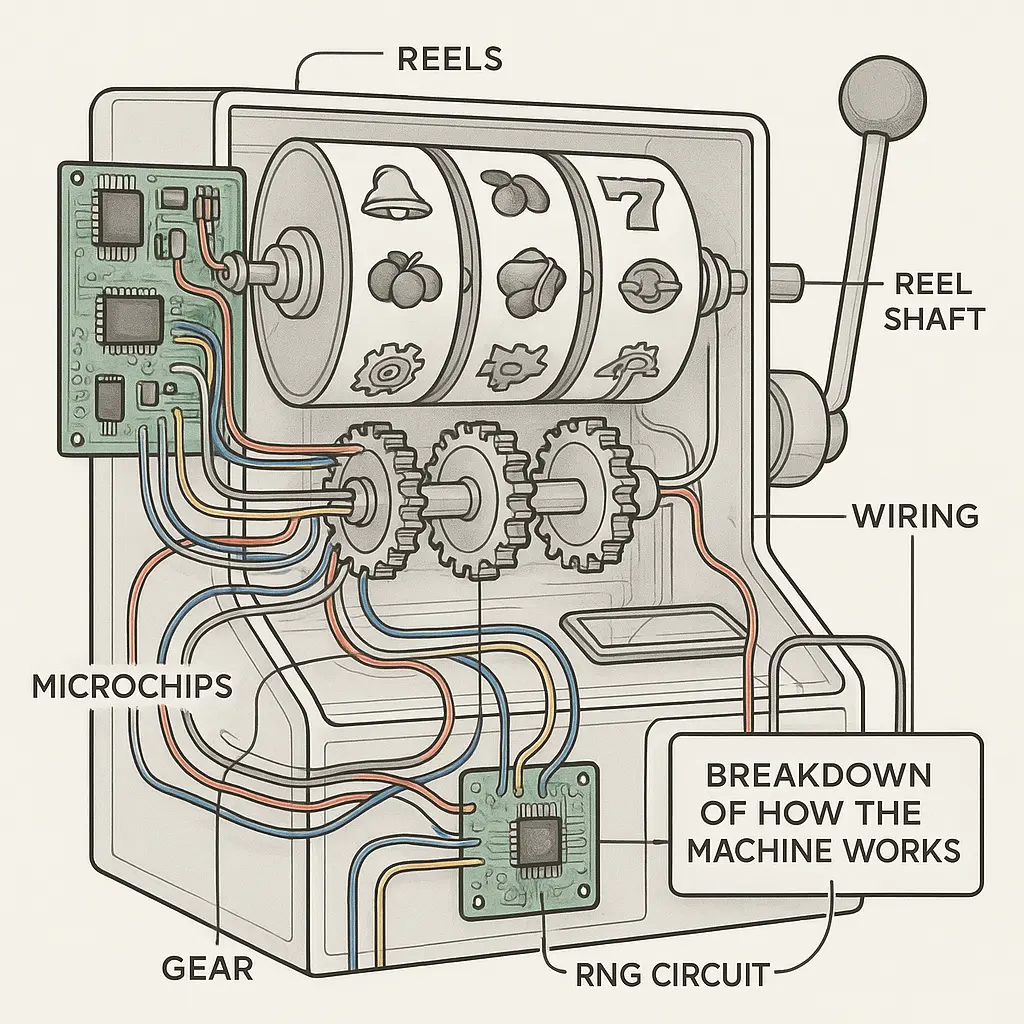
The basic structure of a traditional slot machine includes reels, a lever or “spin” button, payout lines, and a mechanism that controls reel stopping points. When the player activates the machine, the reels spin and eventually stop at random positions. This stopping position is not controlled by the speed of the spin but by the RNG system, which selects outcomes milliseconds before the reels visually stop.
Modern slot machines also incorporate audio-visual elements designed to enhance engagement. Lights, animations, and sound effects serve psychological and entertainment functions, helping the machine maintain a unique sensory identity. All of these elements are aesthetic; they do not influence the machine’s internal algorithm. The true result is always determined by the RNG long before the animation ends.
History of Slot Machines: From Mechanical Reels to Digital Gaming
The history of slot machines dates back to the late 19th century. The first widely recognized slot machine, called the Liberty Bell, was created in 1895 by Charles Fey in San Francisco. This mechanical device featured three metal reels and symbols such as horseshoes, diamonds, spades, hearts, and the iconic cracked Liberty Bell. When all three bells aligned, the machine delivered its highest reward.
Early slot machines were purely mechanical. Each reel was physically connected to gears and springs, and outcomes depended on mechanical precision. Because manufacturing limitations restricted the number of symbols per reel, early machines had very few possible combinations. As a result, their statistical randomness was far simpler than modern systems.
In the 1960s, electromechanical slot machines emerged. These devices used electrical components to control reels, allowing for more combinations and more complex features. This era marked the beginning of themed machines and multi-line gameplay.
The next major leap came in the 1980s and 1990s with the introduction of video slots. These machines replaced physical reels with digital screens. The shift to digital technology meant developers could offer limitless symbol combinations, creative themes, bonus rounds, and advanced sound design. Video slots also enabled the use of sophisticated RNG systems, ensuring fairness and unpredictability.
By the 2000s and beyond, slot machines transitioned into fully digital entertainment systems powered by advanced microprocessors, graphical engines, and even network connections. Today, the digital gaming industry has adopted techniques from video game development, machine learning, and interactive design, turning slot machines into immersive software experiences rather than purely mechanical devices.
How Do Slot Machine Algorithms Work? (Random Number Generator Explained)
The heart of every modern slot machine is its RNG algorithm. Contrary to popular belief, slot machines do not store memory, track outcomes, or change patterns based on previous results. Every spin is independent and determined only by the algorithm at the moment of activation.
The RNG generates numbers thousands of times per second, even when the machine is idle. Each number corresponds to a position on a reel or, in video slots, a virtual symbol index. When a player presses the spin button, the RNG instantly selects a number and assigns the outcome.
Most RNG systems are based on pseudorandom number generation—an algorithmic method that uses mathematical formulas to produce sequences that appear random. Although not “true randomness” in the quantum sense, these algorithms are unpredictable and pass strict statistical randomness tests. The internal code is designed so that no pattern can be identified or manipulated.
Each slot machine also includes a configuration known as the Return to Player (RTP) percentage. This value determines the average long-term return of the machine based on the probabilities encoded into the algorithm. For example, an RTP of 96% means that over millions of spins, the machine returns 96% of the total wagered amounts. This does not influence individual spins; it only reflects the long-term mathematical structure.
Another essential part of the algorithm is the paytable, which links certain symbol combinations to payouts. The RNG determines symbol positions, and the paytable determines what that combination means. These two systems together define fairness, unpredictability, and structure.
Why Do Slot Machines Use RNG? The Science Behind It
The primary reason slot machines use RNG technology is fairness. Without RNG, outcomes could be predicted or manipulated. Regulatory bodies around the world require slot machines—both digital and physical—to use certified RNG systems to ensure unbiased results.
Scientifically, randomness prevents patterns and ensures each outcome is statistically independent from previous outcomes. This independence is crucial because it allows machines to comply with legal standards for fairness. RNG also supports the creation of millions of possible symbol combinations, enabling complex themes and engaging experiences.
Another reason for RNG usage is security. Modern RNG algorithms are extremely difficult to reverse-engineer. Regulatory agencies test machines extensively to confirm that results cannot be influenced by external factors and that players cannot predict future outcomes.
From a design perspective, RNG gives developers creative freedom. They can build thematic slot experiences, bonus rounds, animations, and interactive features—all while relying on a stable mathematical core. This ensures that entertainment is layered over a predictable, regulated structure.